Young Scientists Research Experience 2026
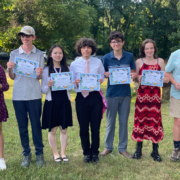
Our Young Scientists Research Experience is one of our favorite programs of the year! Middle and high school students spend a week with us doing their own independent research projects. They come up with a research question, collect data to answer their questions, and share their findings during a presentation to friends and family.
We’re incredibly proud of the work these students did, and we’re excited to share their results with you!
If you’d like to sign up for next year’s Young Scientist Research Experience, you can subscribe to our email newsletter to be notified when registration opens.
Here’s a quick summary of all their hard work:
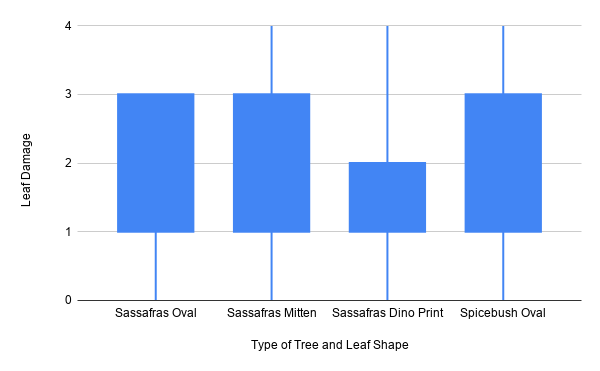
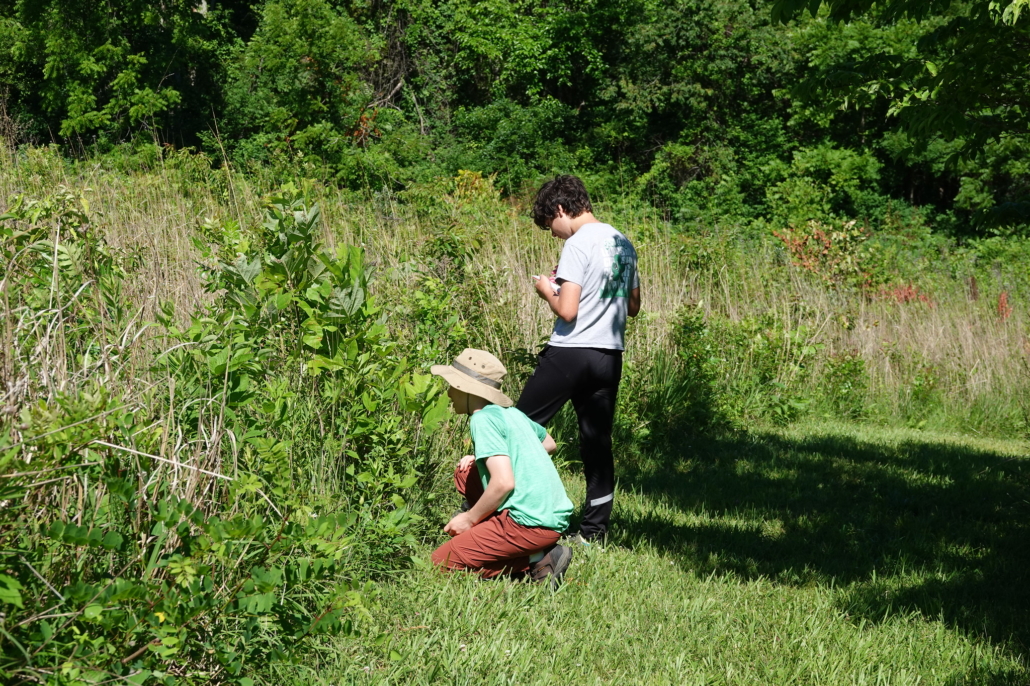
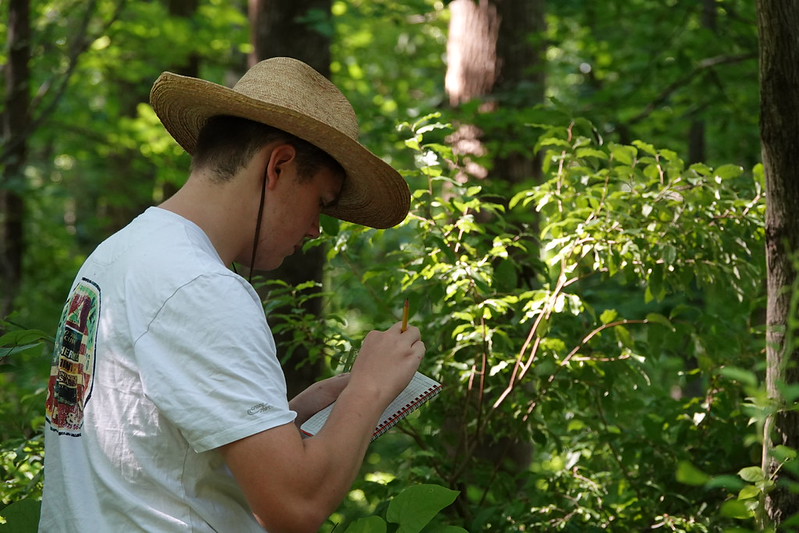
On our morning walk, we did some bug-catching and when Kieran remembered that Sassafras have three different leaf shapes he wondered if there was one that insects do or don’t prefer. Kieran went on the hunt for Sassafras trees and recorded how much leaf damage there was on different shaped leaves, as well as their color and softness. He also included oval-shaped Spicebush leaves in his study as a control since they are in the same family as Sassafras. Perhaps unsurprisingly, he found the least leaf damage on fresh soft leaves, but what was a bit surprising is that there was the least leaf damage on the Sassafras leaves that look like dinosaur footprints (or ghosts, depending on who you ask). Why that is is a subject for further research!
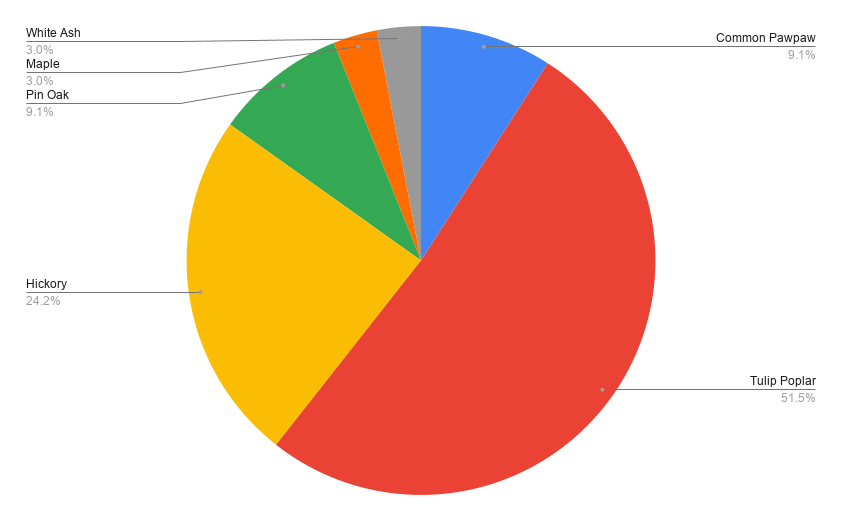
We have been wondering what kinds of trees Yellow-bellied Sapsuckers prefer for years, so we were thrilled when Kiran decided to figure it out for himself. Kiran spent the week looking for trees with sapsucker holes (usually a horizontal line of evenly spaced holes) and recording the species of tree, as well as how many holes and where on the tree they were. He found lots of tulip trees and hickories with sapsucker holes, but since these are some of the most abundant trees in our woods the woodpeckers might just be using what’s available. What was somewhat surprising was how few oaks he found with sapsucker holes. Maybe the wood is too hard? Kiran also found that the sapsucker holes were more likely to be at the tops of trees than the bottom. Now we’re curious why they like being up high!
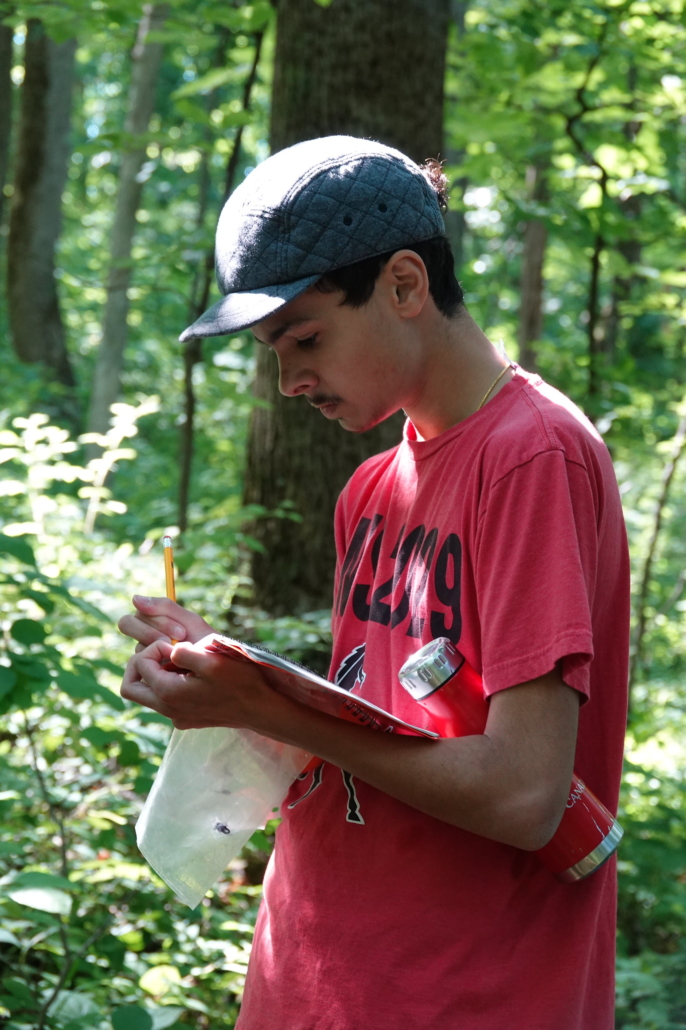
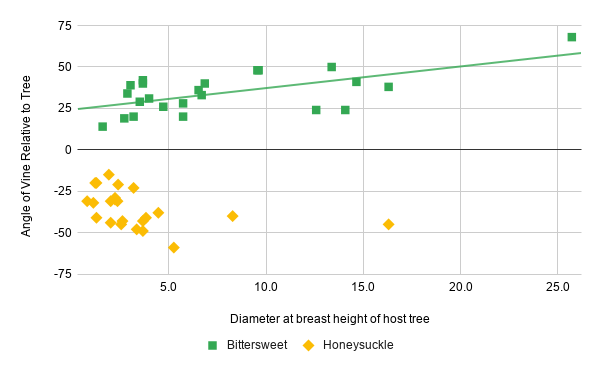
Luke came back for his second year of Young Scientists and switched his focus from birds to vines. Luke noticed that all the vines he was seeing seemed to be growing in the same direction and at about the same angle and wondered if this trend would hold up to further inquiry. He studied Oriental Bittersweet and Japanese Honeysuckle and recorded the angle at which the vines grew relative to their tree hosts. His most astonishing discovery was that all the Oriental Bittersweet he found were growing counterclockwise (up to the right) and all the Japanese Honeysuckle he found were growing clockwise (up to the left). This is apparently known in the scientific literature but it’s not something our staff had ever noticed before! Luke also found that bittersweet grew at a different angle on larger trees whereas honeysuckle grew at about the same angle regardless of the size of the tree. It’s always exciting for us to discover something new about incredibly common species we don’t usually take the time to look at closely.
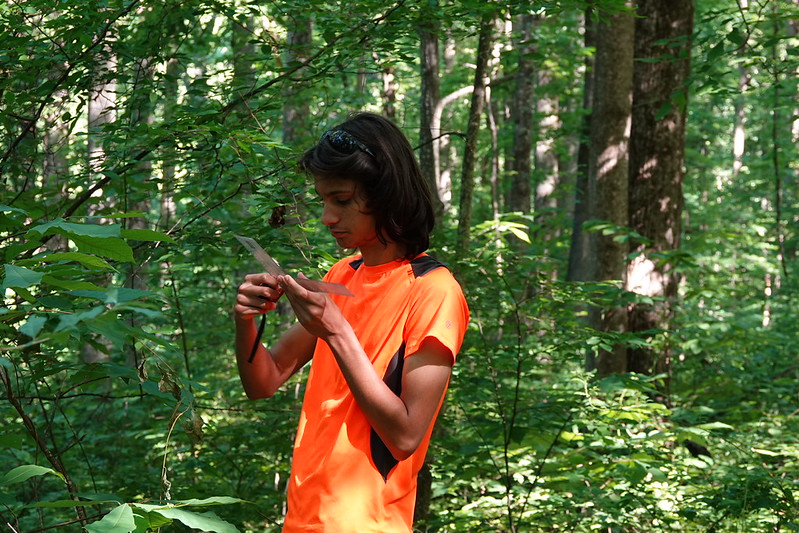
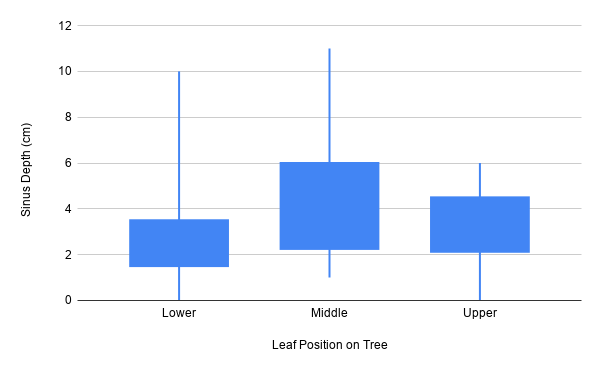
One thing our fields is full of is young tulip trees and that gave Owen a chance to look at an awful lot of tulip leaves. On the first day Owen noticed lots of variation, some big leaves, some tiny leaves, some with deep lobes (indentations), some with barely any lobes at all. All of which led him to wonder, does the sinus depth of a Tulip Poplar leaf depend on how high it is on a tree? in a presentation he brilliantly named “The Highness of the Sinus: Measuring Tulip Poplar Sinuses.” There wasn’t a strong pattern, which is interesting in and of itself, but to the extent he found a relationship it was the middle-height leaves that were largest and had the deepest sinuses. Owen expected there to be a linear relationship one way or the other between leaf height and sinus depth, so he felt that his finding might not be corroborated by more data. There’s always next year!
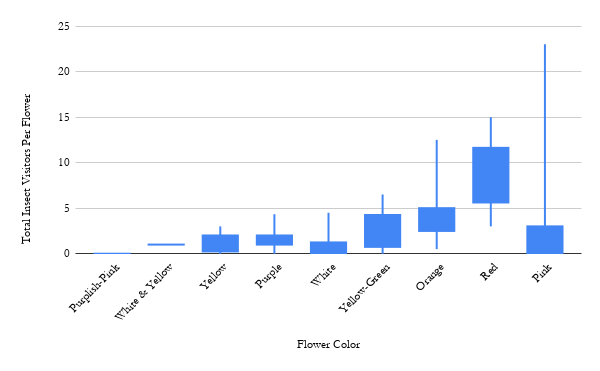
Audrey was captivated by the bright orange Butterfly Milkweed that was blooming in June and wondered if it was its color that attracted so many pollinators or some other factor. Audrey spent the week meticulously counting the numbers of different kinds of insects visiting different color and shape flowers and found that there were the most insects of orange, red, and pink flowers. Since many of the orange and pink flowers were milkweeds, she directly compared orange Day Lilies to orange Butterfly Milkweed and found more insects on the Butterfly Milkweed, suggesting that it has more to do with the milkweed’s shape, smell, or abundant nectar. Audrey also set up an experiment with different colored pan traps and found that orange and pink were popular colors there, too. Audrey hopes to come back next year to figure out once and for all what attracts insects to flowers.
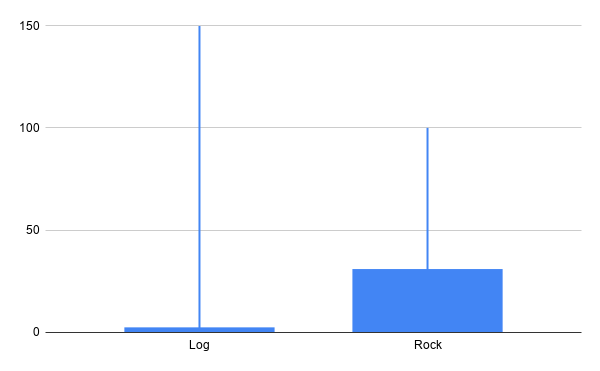
Alistair returned for a third year of Young Scientists and a third project studying what kinds of microhabitats arthropods prefer. After studying whether spiders prefer fields or forests and what shape leaves Spotted Lanternflies like to land on, this year Alistair compared the bug community living under rocks and logs. Alistair found more total arthropods under rocks but more types of arthropods under logs. He wondered if this might be because rocks provided cooling shelter in summer heat and wants to try the same experiment at different times of year.
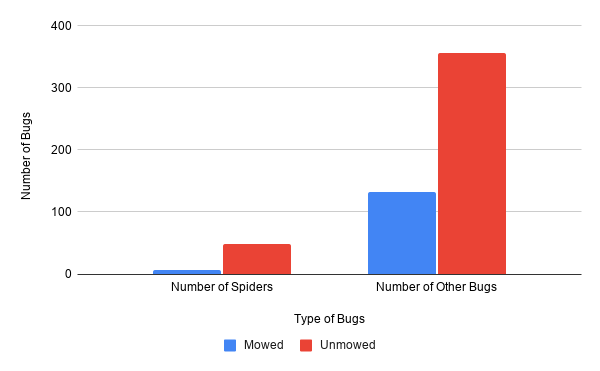
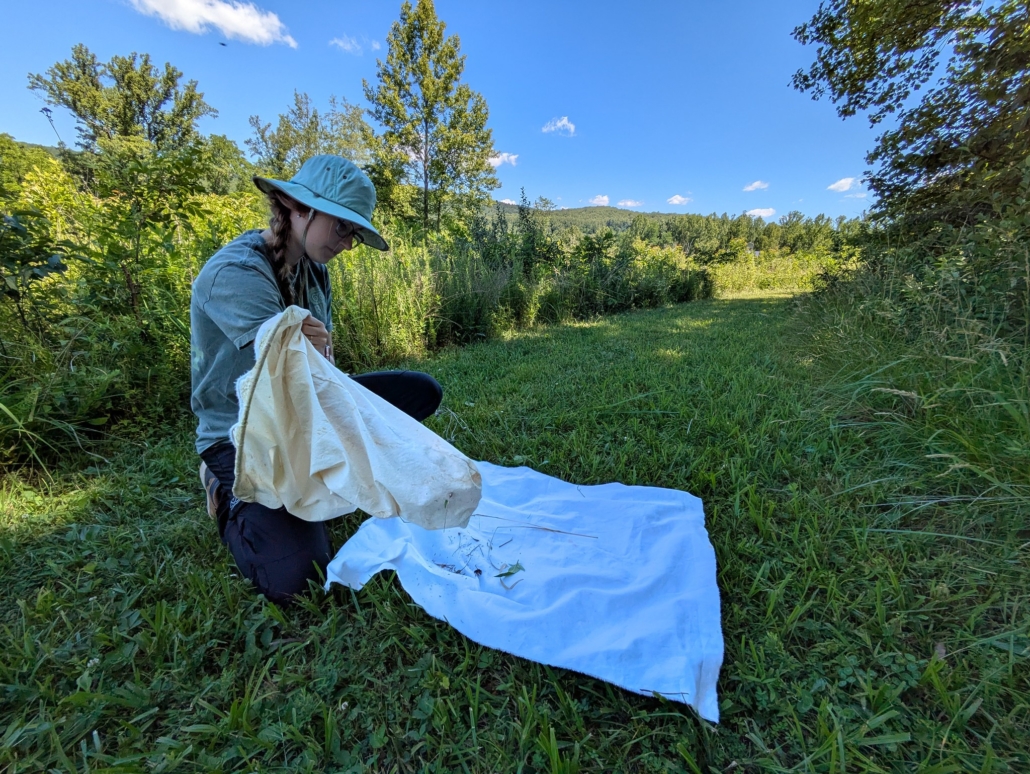
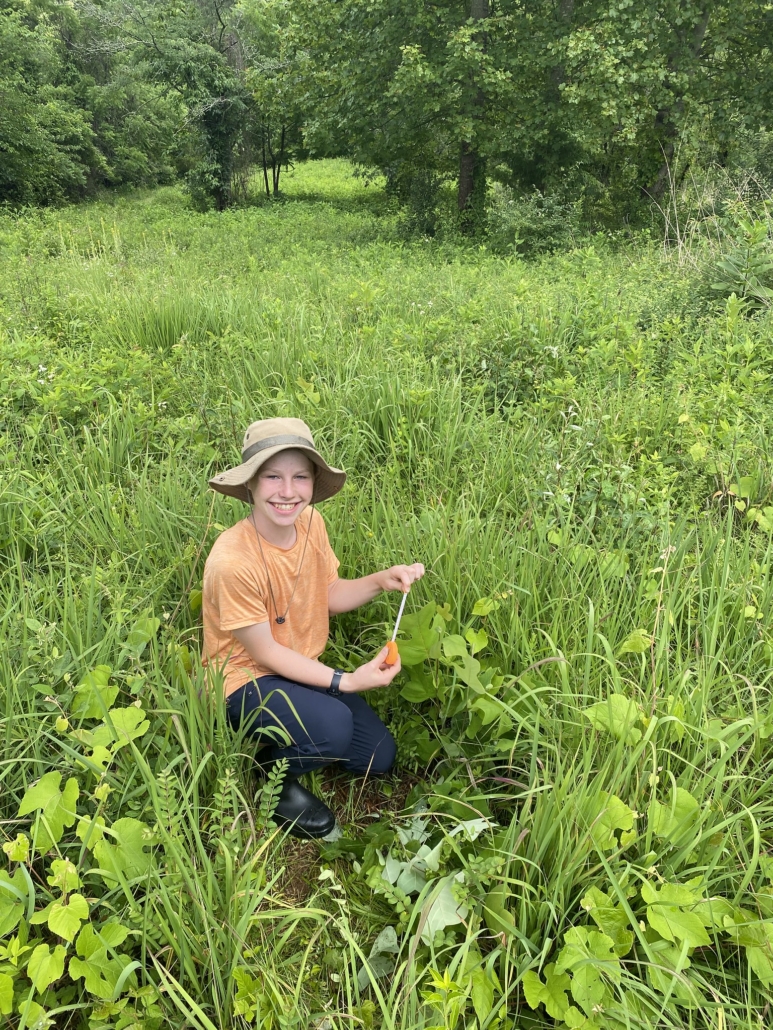
It took just one encounter on our morning walk for Ellie to fall in love with jumping spiders and she dedicated her week to figuring out where they like to live. Over the course of 100 sweep net samples she got very good at swishing the heavy net through thick vegetation and was recognized at the end of the week for the care with which she returned each and every bug to where she had found it. Despite it being easier to move the net through mowed vegetation, she found many more jumping spiders, as well as other insects, in unmowed vegetation. Ellie wants to be a zoologist when she grows up and we hope her experience with some of our smallest animals helped her on that path.