Land management practices can help protect salamanders and other amphibians

Warrenton, Virginia | February 1, 2021

Increasing urbanization is threatening Spotted Salamanders and other amphibians, according to a newly released report from the Clifton Institute. Spotted Salamanders live in deciduous forests and rely on vernal pool habitats for breeding. Human activity such as urbanization is adversely impacting these key Spotted Salamander habitats in the following ways:

  • Deforestation decreases the amount of habitat available to Spotted Salamanders.
  • Forest fragmentation cuts off Spotted Salamander populations from each other, leading to inbreeding.
  • Roads crossing through Spotted Salamander habitat make them vulnerable to vehicle traffic.
  • Spotted Salamanders absorb chemicals through their skin more easily than other animals, making them especially vulnerable to pollutants and changes in water acidity.

“Spotted Salamanders are a special part of our local ecosystem. Unfortunately, it can be difficult for them to find places to breed in areas that are too developed,” said Eleanor Harris, managing director of the Clifton Institute. “The good news is that there are a few simple actions we can all take to create and protect their habitat so that Spotted Salamanders can continue to find a home in Northern Virginia.”

The study finds that once 30 percent of the land within 250 meters of a vernal pool has been developed, Spotted Salamander were no longer able to breed. Actions that land managers, developers and others can take to help protect Spotted Salamanders and their habitat include:

  • Protecting land through conservation easements
  • Directing traffic in key areas to help salamanders cross roads safely
  • Constructing vernal pools to provide Spotted Salamanders with breeding habitat
  • Promoting healthy Spotted Salamander habitat by leaving woody debris

The Clifton Institute offers a variety land management resources that are available for free to assist landowners in cultivating healthy habitats where both people and wildlife can thrive. To view the Clifton Institute’s full list of land management resources, click here.

To view the full report, click here.

To learn more about the Clifton Institute, visit cliftoninstitute.org.

# # #

The Clifton Institute is a Northern-Virginia based nonprofit dedicated to inspiring the next generation of environmental stewards, learning about the ecology of the northern Virginia Piedmont, and conserving native biodiversity. We accomplish this mission by providing environmental education to people of all ages, carrying out ecological research, and restoring habitat for native plants and animals. Our 900-acre property in central Fauquier County, which is permanently protected under a conservation easement, provides a beautiful and easily accessible environment for our programs. For more information, visit cliftoninstitute.org, like us on Facebook and follow us on Instagram.
Clifton Institute data will help determine the state of bird populations across North America

Warrenton, Virginia | January 5, 2021

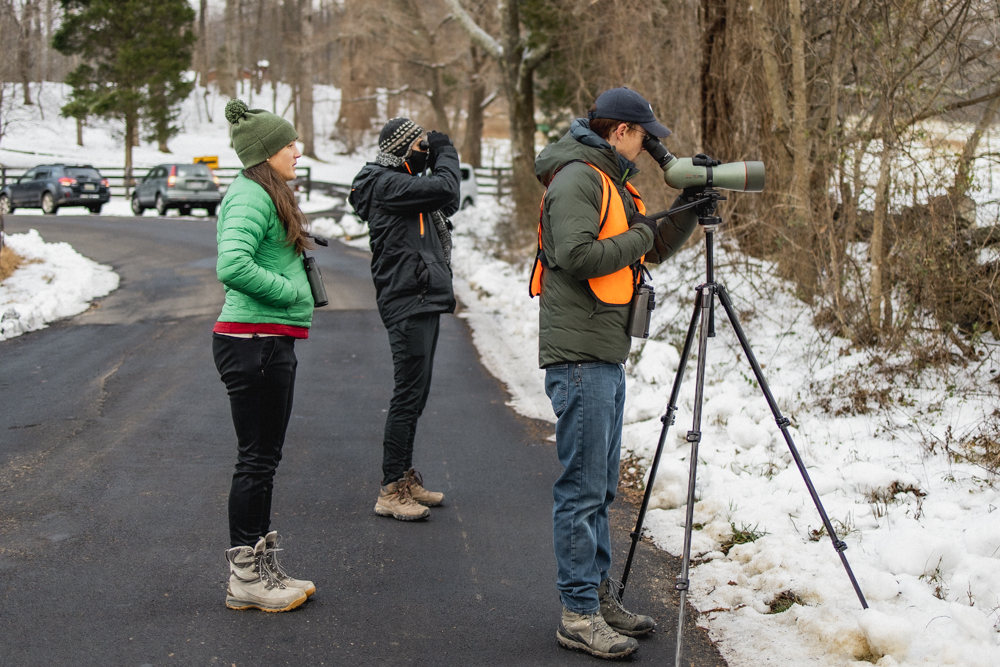
The Clifton Institute, with the help of 24 volunteers, counted 104 species of birds and 24,447 total birds within a 15-mile-diameter circle as part of the National Audubon Society’s annual Christmas Bird Count initiative. This is the most species ever observed in this circle, which has been surveyed annually for 21 years, thanks to the high number of volunteers and the cold weather bringing birds out to forage. The data submitted by the Clifton Institute will be compiled with information collected from community scientists across the country to develop a snapshot of the state of bird populations across North America. Some of the most interesting bird species observed by participants of the Clifton Institute event included:

  • Palm Warbler (a first for the count)
  • House Wren (a first for the count)
  • Sandhill Crane
  • Rusty Blackbird
  • Greater Scaup
  • Short-eared Owl

The Christmas Bird Count is the country’s longest-running community science bird project, and the data collected from this initiative over the past 120 years illustrates how bird populations across the continent have changed throughout 12 decades. For example, in a recent study published in the journal Science, scientists analyzed data from Christmas Bird Counts and found that human activity has caused a loss of nearly three billion North American birds over the past 50 years, primarily because of habitat loss. Current data contributed by the Clifton Institute from the Warrenton region will help researchers continue to study the long-term health and status of bird populations and habitats, as well as develop conservation strategies.

“The Christmas Bird Count is one of the most important and longest-running biodiversity surveys in the world. It shows how volunteer birdwatchers can collect high quality data across the continent,” said Bert Harris, executive director of the Clifton Institute. “The Clifton Institute is proud to take part and contribute information that will be used to figure out how to protect the birds of North America.”

The Clifton Institute hosts many birding programs throughout the year, including bi-monthly bird walks that provide both novice and experienced birders the opportunity to discover many species of birds across various habitats at the Clifton Institute’s 900-acre field station. Past birding events have included Octobird Fest, a program for participants to learn winter bird identification techniques, and Warbler Song Boot Camp, to teach people how to identify warblers in spring migration. This February they are offering Birding Like Buddha, part of the Mindful Naturalists program series created to inspire mindful observation and nature appreciation.

To learn more about events at the Clifton Institute, click here.

To learn more about the Clifton Institute, visit cliftoninstitute.org.

# # #

The Clifton Institute is a Northern Virginia-based nonprofit dedicated to inspiring the next generation of environmental stewards, learning about the ecology of the northern Virginia Piedmont, and conserving native biodiversity. We accomplish this mission by providing environmental education to people of all ages, carrying out ecological research, and restoring habitat for native plants and animals. Our 900-acre property in central Fauquier County, which is permanently protected under a conservation easement, provides a beautiful and easily accessible environment for our programs. For more information, visit cliftoninstitute.org, like us on Facebook and follow us on Instagram.